FloraPulse Sensor Troubleshooting Guide

Sensor Troubleshooting Guide

Is your data looking unusual? Let's figure it out.
What normal data looks like

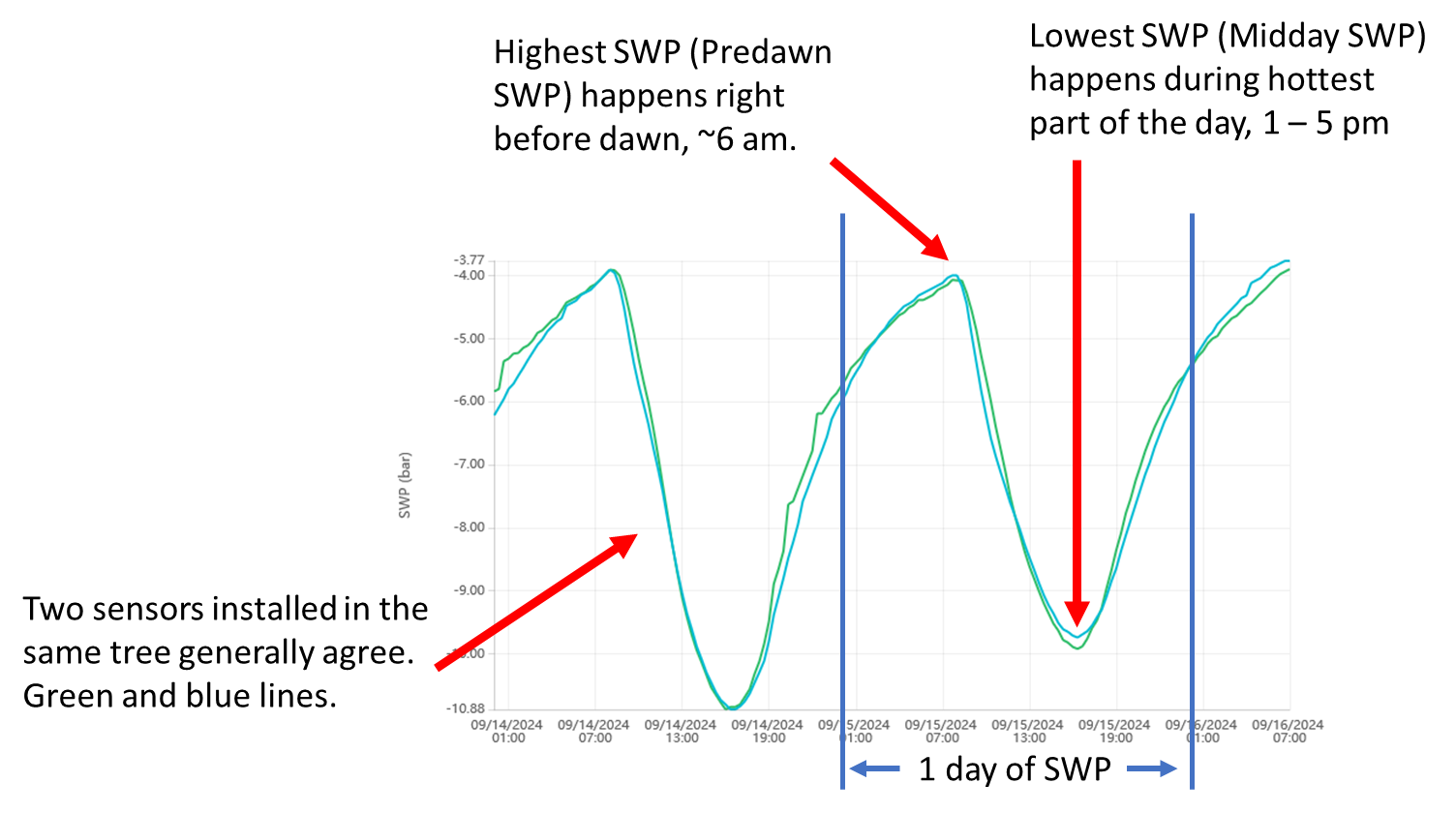
Typical 2-day SWP pattern
Typical 2 Days
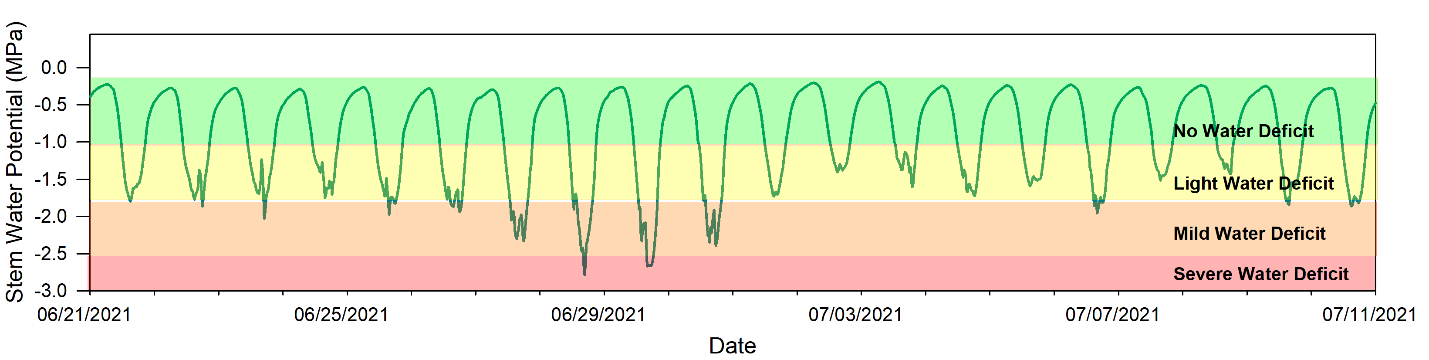
Sensor recovers overnight to the highest SWP right before dawn (predawn SWP), then dries out to reach lowest SWP during the hottest part of the day (midday SWP), and recovers again as temperatures drop. Two sensors installed in the same tree read similar values. Some difference is normal.
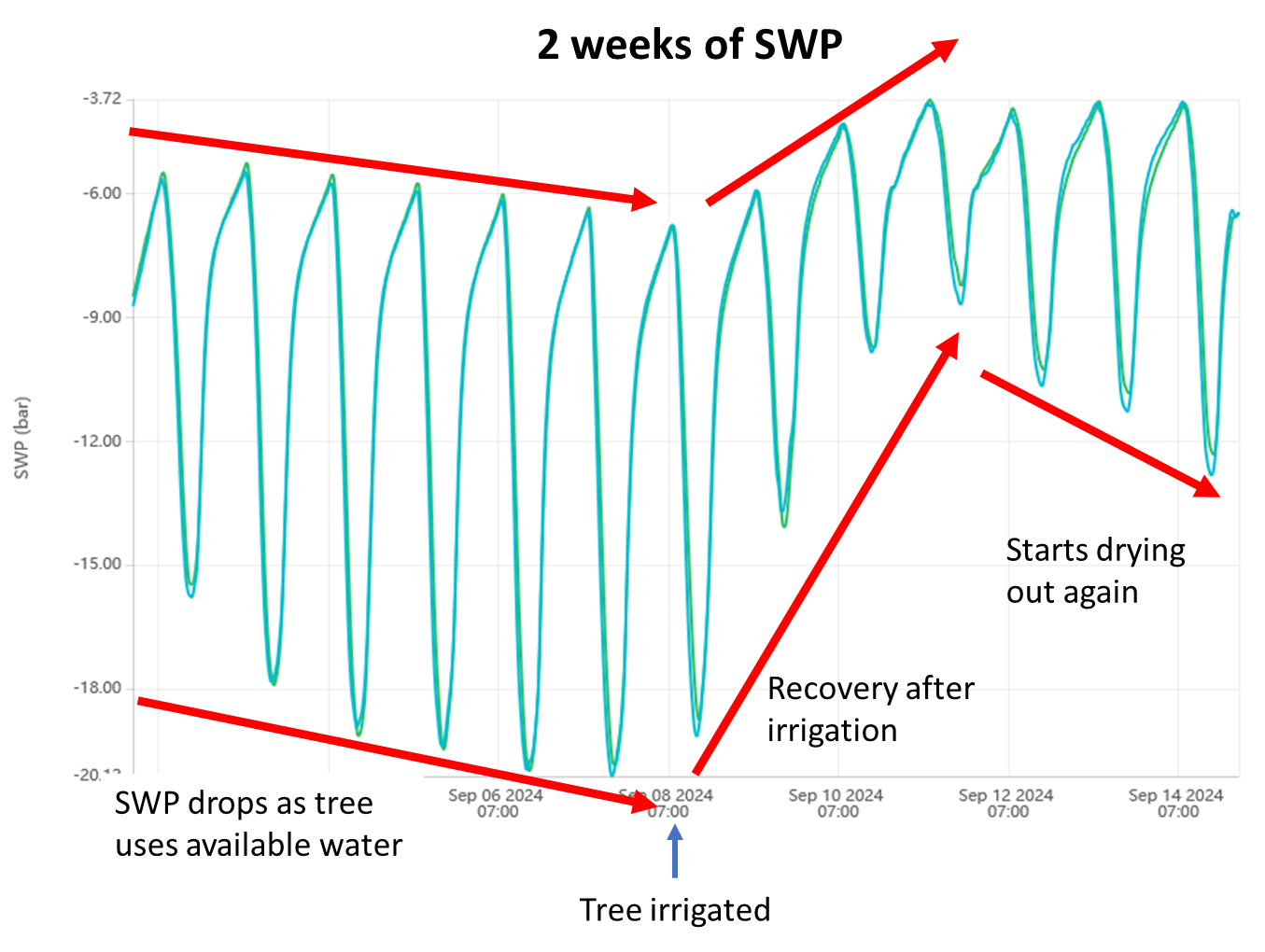
Typical 2-week SWP pattern
Typical 2 Weeks
Over the course of days, the sensors show trends as the tree uses water and the measured SWP drops, then the tree is irrigated and SWP increases as the tree recovers. This drying and recovery cycle is normal. During drying, midday SWP drops substantially, but predawn SWP only drops slightly.
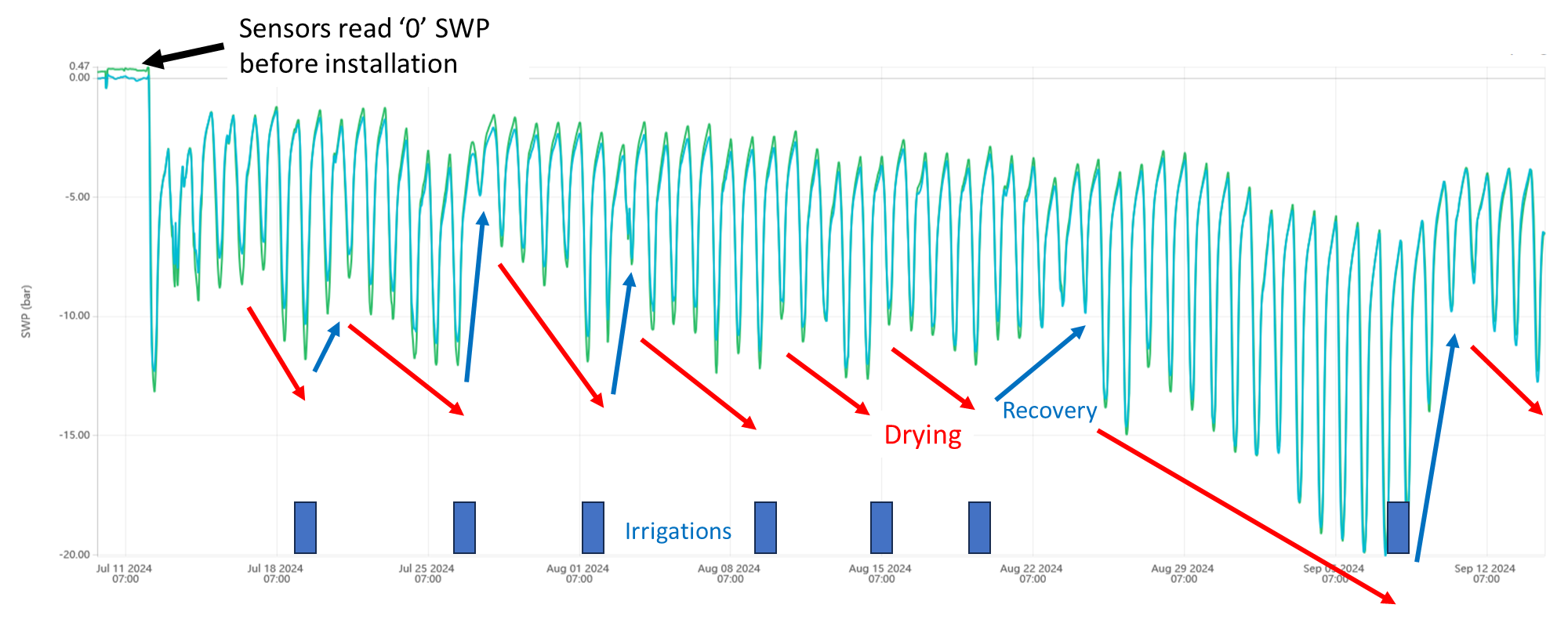
Typical 2-month SWP pattern
Typical 2 Months
Over months, you should see a longer-term pattern of drying and recovery. There should be a clear recovery trend after irrigation. Recovery can sometimes happen in a day, but other times can take a week. Sensors will read zero when in water before installation.
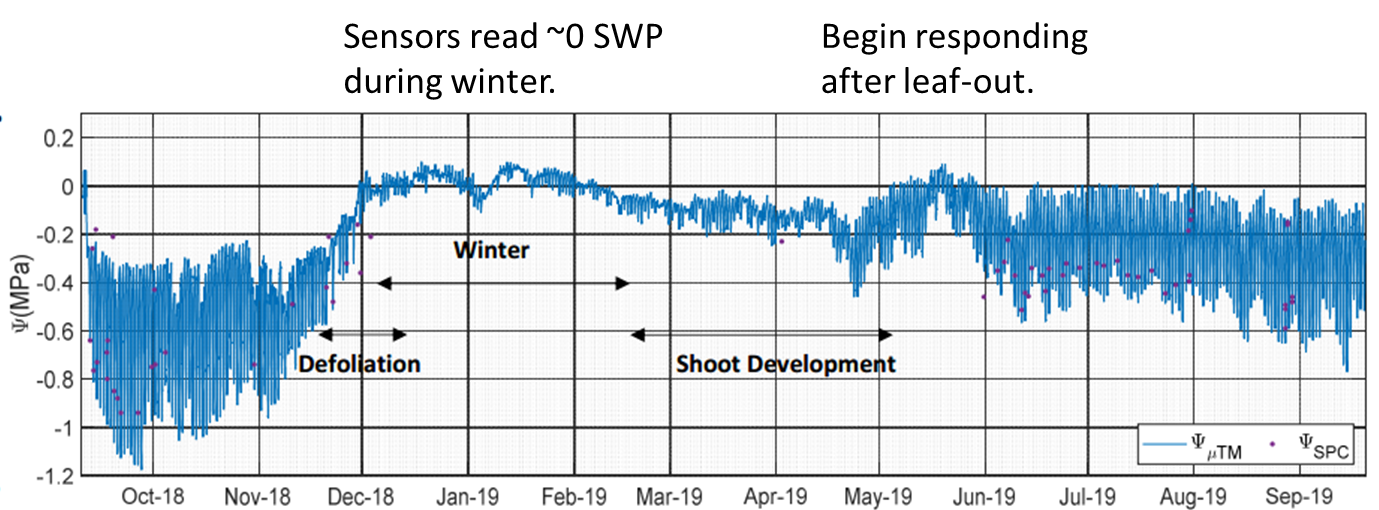
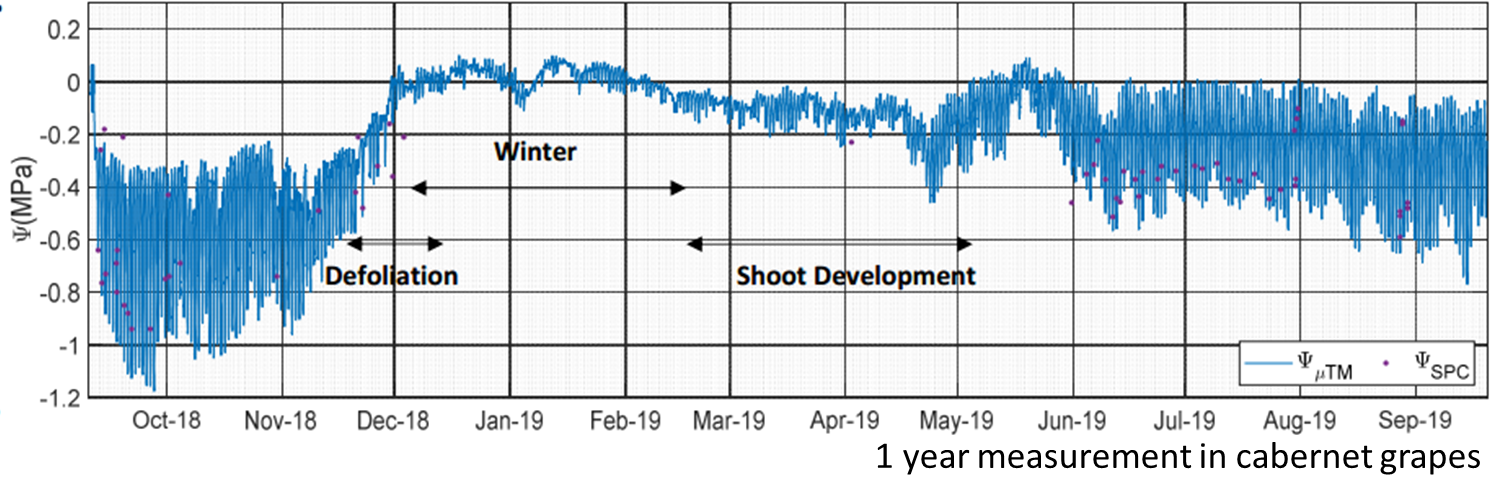
Typical 1-year SWP pattern
Typical 1 Year
During winter, the tree loses its leaves and stops transpiring — sensors generally read zero SWP or slightly positive. During spring, leaves come out and a clear diurnal pattern begins. During summer, days are hotter and midday SWP is usually lower (more negative). In some crops, the sensor installation wound closes during winter — we recommend reinstalling sensors in the spring after leaf-out.
Great — your sensors are working normally!
Your data shows expected diurnal patterns and seasonal trends. No action needed.

Common Questions (Not Problems)

These are normal behaviors that scientists frequently ask about.
"My readings dip every afternoon"
This is the normal diurnal pattern. Plants experience peak water stress during the hottest part of the day (typically 12–4 PM). The sensor measures this real-time stress cycle. The lowest point each day is the “midday SWP” — this is the key value used for irrigation decisions.
"My two probes show different values"
Some disagreement between probes is normal — they are installed in different parts of the tree with different xylem connections. A consistent offset of 1–3 bars is typical and does not indicate a problem. If the daily pattern shapes are similar but offset, everything is working correctly. Disagreement over 5 bars may warrant investigation.
"Data reads zero in winter"
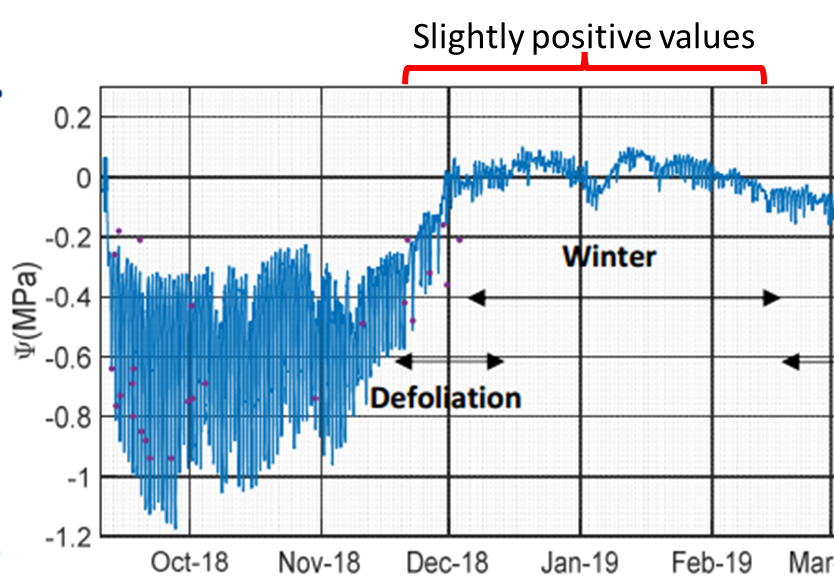
During winter dormancy, deciduous trees stop transpiring and SWP naturally goes flat near zero. This is expected behavior, not a sensor failure. Data during dormancy is not particularly useful and may be dominated by noise. We recommend removing and reinstalling sensors after winter for best accuracy.
+ "Readings are slightly positive (under +1 bar)"
Slightly positive readings example
Sensors may read values slightly above zero due to normal electrical noise. In some crops (e.g., grapevines during leaf-out), there is actually positive pressure in the xylem and the sensor reads this correctly. Readings up to +1 bar above zero are generally normal and not a cause for concern.

What does your data look like?

Select the pattern that best matches what you're seeing.
Data went flat
Data went flat or to zero
Readings dropped to zero or near zero and stayed there
Noisy data
Data is jumpy, noisy, or spiking
Erratic readings, unexpected spikes, or unrealistic values
Data too negative
Data is trending too negative
SWP keeps dropping to unreasonably low values over days
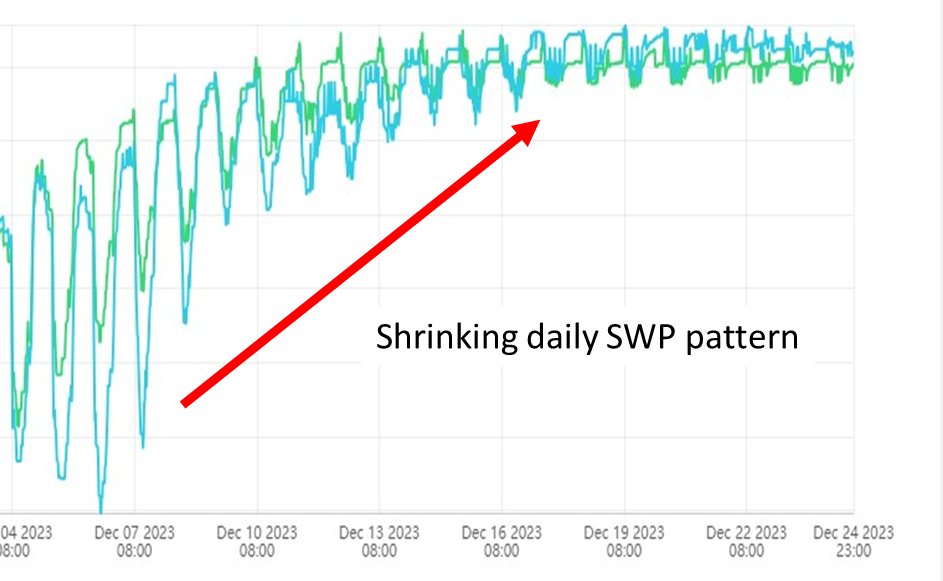
Shrinking pattern
Daily pattern is shrinking or delayed
The difference between daily high and low SWP is getting smaller, or the lowest point has shifted to nighttime
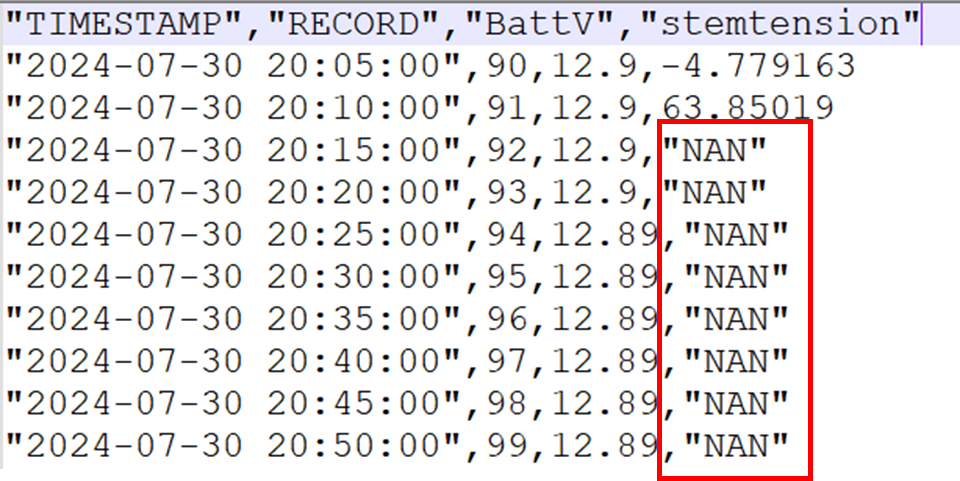
NaN values
Getting NaN or data gaps
SDI-12 interface showing NaN values or missing data points
Seasonal issues
Installation or seasonal problem
Issues with installation, winter damage, freezing, or sensor validation
📡
FloraPulse datalogger issues
Battery, cellular signal, or upload problems with the FloraPulse 4G logger (not your own datalogger)
?
None of these match
Describe your issue to our AI assistant
Data went flat or to zero
Which of these patterns best matches your data?
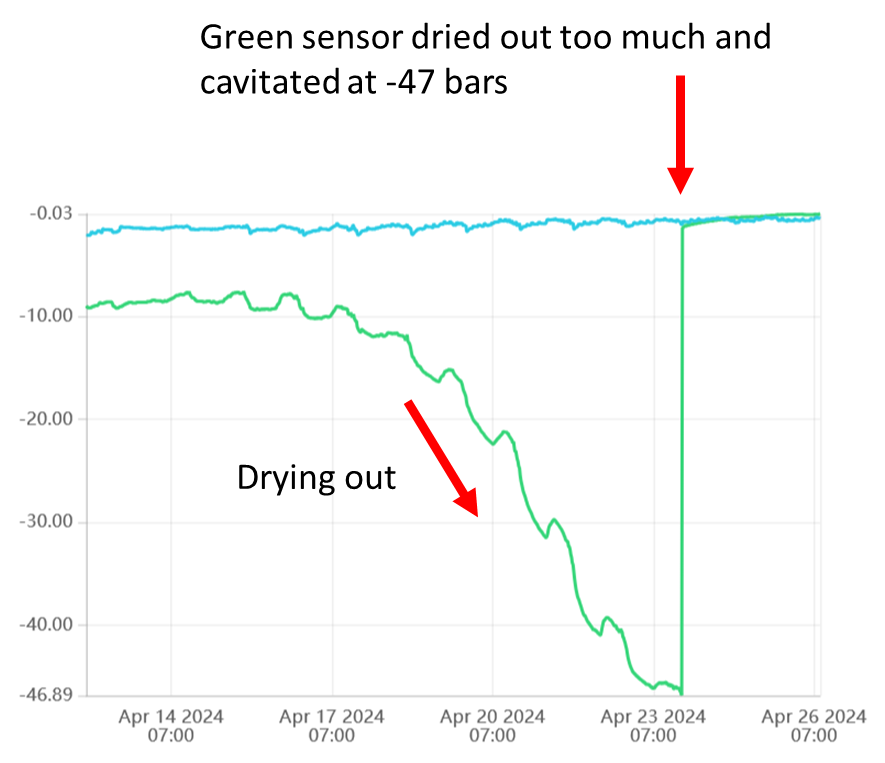
Cavitation
Suddenly jumped to zero
SWP was getting more negative, then abruptly jumped to near zero and stayed flat. This is irreversible.
Flooding/Wounding
Slowly drifted to zero
SWP gradually moved toward zero over days or weeks. May be caused by the tree's wounding response.
Waterlogged
Went to zero after rain
Readings went to zero right after a rain or wetting event. The trunk insulation may be trapping moisture.
Flat near zero during winter
Tree is dormant and not transpiring. This is normal for deciduous crops.
This is expected behavior
During winter dormancy, deciduous trees stop transpiring and SWP naturally goes flat near zero. No action needed. Consider removing and reinstalling sensors in spring after leaf-out for best accuracy.
Data is jumpy, noisy, or spiking
Which of these patterns best matches your data?
Psychometric effect
Unrealistic dips during hot parts of day
Readings look reasonable at night but show extremely negative spikes around 10 AM – 2 PM, especially on hot days.
Random spikes
Random upward spikes
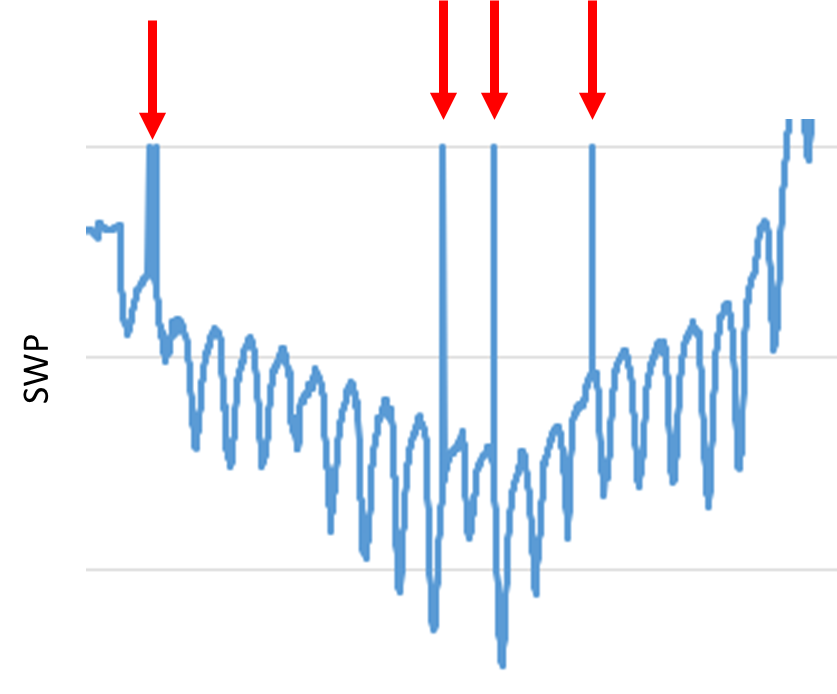
Occasional upward spikes in the reading. May be caused by the tree pressing on the sensor chip.
Sensor break
Sudden jump + big noise
SWP suddenly jumped to an unrealistic value and shows 5+ bar noise. The sensor may be physically damaged.
Positive values
Consistently positive (over +1 bar)
Sensor persistently reads positive values above +1 bar, not just briefly after rain.
Data is trending too negative
Which of these patterns best matches your data?
Both probes trending negative
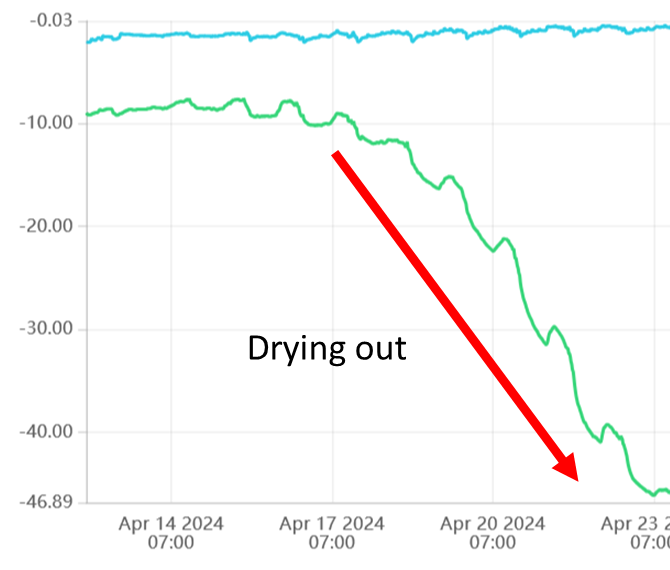
Both probes show similar extreme values. The tree may genuinely be very stressed and need immediate irrigation.
Seal failure
Only one probe is extreme
One probe reads unreasonably negative while the other looks normal. The installation site seal may be failing.
Approaching -35 bars
Readings approaching -35 bars — the sensor is at risk of cavitation. Consider proactive action.
Daily pattern is shrinking or delayed
Which of these patterns best matches your data?
Shrinking diurnals
Daily swing getting smaller
The difference between daily high and low SWP decreases over time. May go flat eventually.
Delayed minimum
Lowest SWP at nighttime instead of afternoon
Sensors initially reach minimum SWP at 3 PM, but over time it shifts to 6 PM, 9 PM, then eventually 2 AM.
One probe shrinking, other normal
One probe's pattern is shrinking while the other maintains normal amplitude. The affected probe may be losing xylem contact.
Getting NaN or data gaps (SDI-12)
Which of these patterns best matches your data?
Sporadic NaN
Sporadic NaN values
Occasional NaN (Not a Number) readings among normal data. A few per day may be normal for SDI-12.
Continuous NaN
All readings show NaN. The SDI-12 communication is consistently failing.
Choppy data
Choppy data with regular gaps
Data appears intermittently with regular gaps or patterns of missing readings.
Installation or seasonal problem
Which of these best describes your situation?
Sensor never worked from the start
The sensor was installed but never showed reasonable data — readings are flat, stuck at an extreme value, or show no diurnal pattern from day one.
Freeze damage
Sensor readings went crazy after freeze
After temperatures dropped below 0°C, the sensor readings became erratic, extremely negative, or stopped entirely.
Over-winter wound closure
Sensor worked last season but reads wrong now
The sensor worked well last growing season, but after winter the readings are too wet, flat, or don’t match the pressure chamber.
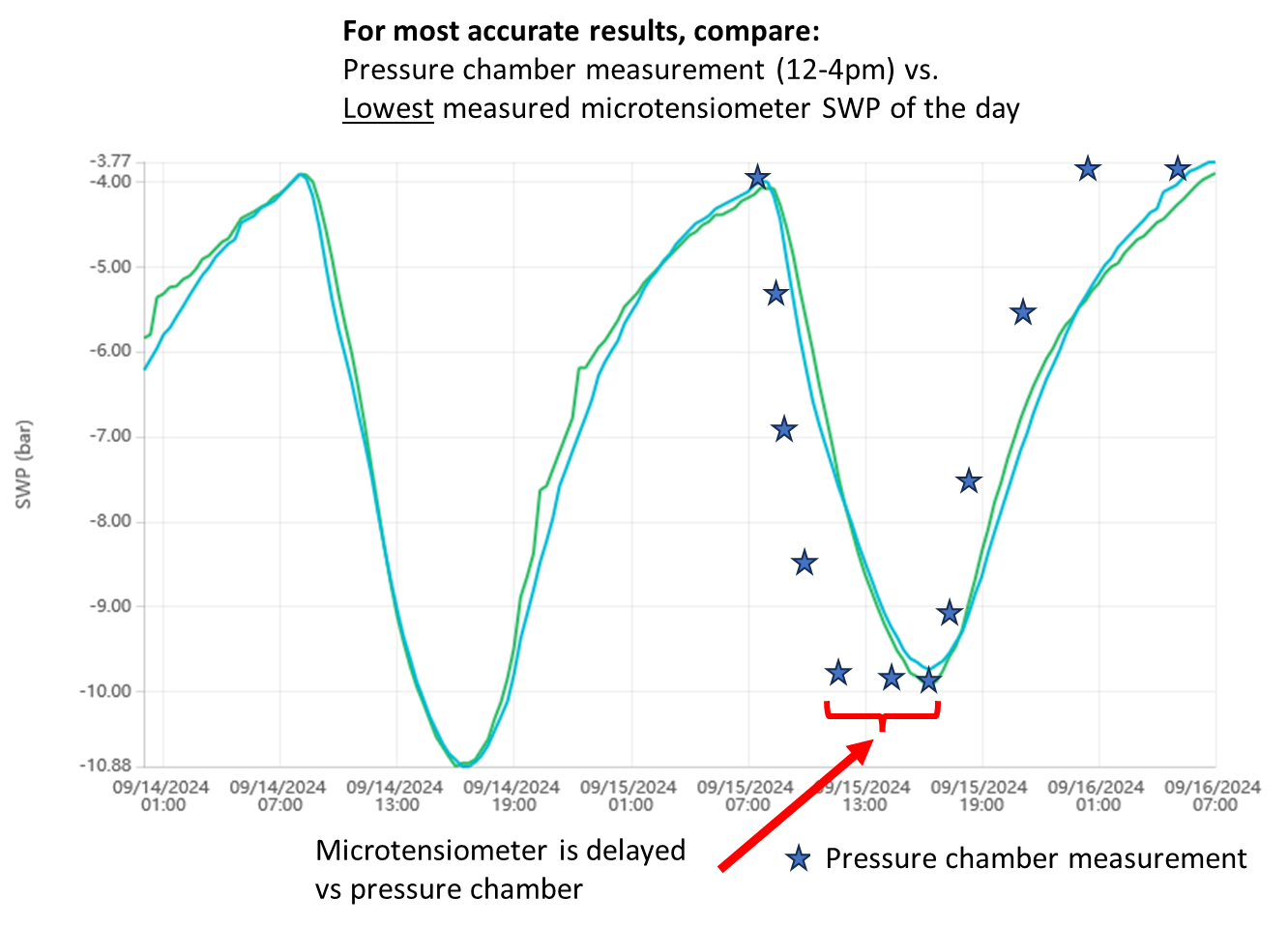
Pressure chamber comparison
How do I validate against the pressure chamber?
You want to check if your sensor is reading correctly by comparing it against a Schölander pressure chamber.
Pressure chamber mismatch
My sensor reads differently from the pressure chamber
Your microtensiometer readings don’t match your pressure chamber measurements.

FloraPulse 4G Datalogger Issues

Which best describes the problem?
No data uploading at all
The logger has completely stopped sending data. No new readings appearing.
Choppy data
Data is choppy or has gaps
Data appears intermittently with gaps. Uploads are inconsistent.

Diagnosis

Does your data match this pattern?
Glad we could help!
If the issue returns, come back anytime.
FloraPulse Scientist Support
Context:
Describe your issue and our AI will help diagnose it. For complex problems, we'll connect you with our team.
Email FloraPulse directly: admin@florapulse.com